AI Writes Code Now. Do We Still Need to Learn Programming?
📅 August 12, 2026 | ⏱ 7 min read
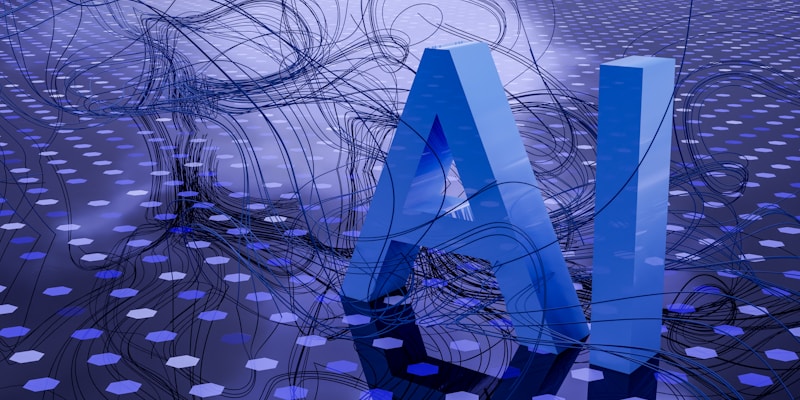
AI writes code — but can it replace the human mind behind it?
The short answer is yes. But the way we learn to code — and the reasons we learn — are changing dramatically.
This is one of the biggest questions in education right now. Students are worried they're "not necessary anymore". Tech CEOs are making bold statements that people don't need to learn to code. And AI tools can now generate entire websites, fix bugs, and write complex functions in seconds.
So why bother?
Let me give you five clear reasons why learning to code still matters in 2026 — and why it might matter more than ever.
1. AI is a Tool, Not a Replacement

Here's the thing about AI code generators: they're impressive, but they're also wrong. Constantly.
AI can produce a working function in seconds. But what it can't do reliably is:
- Understand the full context of your application
- Catch subtle bugs that pass syntax checks but break in production
- Make judgment calls about architecture or security
- Debug its own output when it doesn't behave as expected
Think of AI like a calculator. A calculator can do math faster than any human. But if you don't understand why 2 + 2 = 4, you won't know when the calculator gives you the wrong answer because you typed it in wrong.
The same applies to coding. Developers who understand what AI produces, can debug it, integrate it, and know when not to use it will always outperform those who just paste and pray.
"The job has shifted. It's no longer 'write every line of code from scratch.' It's 'review, integrate, debug, and direct the work AI is doing for you.' And you can't do that without understanding how code works at a fundamental level."
2. Learning to Code Teaches You How to Think

This might be the most important reason of all.
Learning to code isn't just about learning a programming language. It's about learning computational thinking — how to break down complex problems, recognize patterns, design solutions step by step, and think systematically.
As the Raspberry Pi Foundation puts it: "It is through the hard work of learning to code that students develop computational thinking skills."
These skills transfer everywhere — not just to tech jobs, but to any career or problem you'll face in life. AI pioneer Geoffrey Hinton recently urged students to keep learning to code, comparing it to studying Latin — not for the language itself, but for the critical thinking it develops.
Coding teaches you to think. And thinking is something AI can't do for you.
3. You Can't Evaluate What You Don't Understand

Imagine you're a manager and an AI generates a report for you. If you don't understand the data behind it, you can't tell if the report is accurate or completely wrong.
The same is true for code.
AI-generated code can look correct — it passes syntax checks, it seems to work — but it might have subtle bugs, security vulnerabilities, or performance issues that only become apparent later.
The developers getting hired in 2026 share one trait: they know how to read code as well as write it. Reading code, understanding what it does, spotting where it'll break, and improving it is the new core skill.
If you skip the fundamentals and just learn to prompt AI tools, you end up in a tough spot. You can produce code, but you can't trust it. You can't fix it when it breaks. You can't explain it to a senior developer or a client.
AI generates the first draft. You evaluate, fix, and ship the final version.
4. Coding is a Digital Literacy

The Raspberry Pi Foundation makes a powerful argument: coding is a literacy.
Just like reading and writing help you understand and participate in the world, coding helps you understand and participate in the digital world. Lots of the decisions that affect our lives are already being made by AI systems. If you don't understand how those systems work, you're at their mercy.
As one observer put it: "Program, or be programmed".
Learning to code gives you agency in a digital world. It helps you understand what's happening behind the apps and websites you use every day. It helps you spot manipulation, understand privacy risks, and make informed decisions about technology.
5. AI is Creating More Demand for Coding Skills

Here's the irony: as AI spreads into more industries, it's likely to increase demand for computer science and coding skills.
Why? Because AI doesn't replace the need for technology — it expands it. From healthcare to agriculture, we're seeing demand for people who can combine programming with domain-specific knowledge.
Coding is no longer just for software engineers. It's becoming a core skill that enables people to work effectively in a world shaped by intelligent machines.
Even Andrew Ng — one of the most respected figures in AI — says everyone should learn to code. "Because AI coding has lowered the bar to entry so much, I hope we can encourage everyone to learn to code — not just software engineers," he said. He compares it to knowing "a little bit of math" — a hard skill that applies to many careers.
So, What Should You Actually Learn?
The goal isn't to race against the machines. It's to learn skills that help you work with them.
Here's what that looks like in practice:
| What's Changing | What Stays the Same |
|---|---|
| Memorizing syntax | Understanding logic and structure |
| Writing code from scratch | Reading, evaluating, and debugging code |
| Learning one language deeply | Learning computational thinking (applies everywhere) |
| Competing with AI | Collaborating with AI |
The fundamentals haven't gone away. If anything, they matter more now.
Final Thought
The students who learn to code today won't just be competing with AI. They'll be shaping it — guiding it, controlling it, critically evaluating its outputs, and making ethical decisions about how it's used.
The power to create with technology is already concentrated in too small a group of people. Learning to code opens up that opportunity to everyone.
So yes — learn to code. But learn it for the right reasons. Not just to write code, but to think better, understand the digital world, and build the future you want to see.
💬 What do you think?
Are you still planning to learn programming, or has AI changed your mind?
Drop a comment below — I'd love to hear your perspective.
👇 Scroll down and leave a reply!
📬 Found this helpful? Share it with a fellow educator or student.
Computer Educator — Making computer science simple for everyone.


No comments:
Post a Comment